
Case Study · Salesforce Revenue Cloud
Enterprise CPQ Modernization with Salesforce Revenue Cloud
From a heavily customized CPQ environment to a faster, more scalable revenue platform
A global enterprise technology company had outgrown its legacy Salesforce CPQ implementation. Complex product rules, custom pricing logic, and years of technical debt had made quoting slow and hard to maintain. Migrating to Salesforce Revenue Cloud modernized its quote-to-cash architecture and created a scalable foundation for configuration, pricing, contracting, and revenue operations.
LEGACY CPQRATIONALIZEREVENUE CLOUDHYBRID REVENUE MODELS
54%Faster quote turnaround
3.7 → 1.7 business days
68%Fewer pricing errors
Quote corrections reduced
70%Faster product launches
5–6 weeks → 8–10 days
91%Sales user adoption
Within three months
Customer Profile
The customer is a multinational enterprise technology provider serving large commercial and public-sector organizations across North America, Europe, and Asia-Pacific.
Industry
Enterprise Technology
Regions
North America · Europe · APAC
Sales Users
1,800+
Quote Volume
~45,000 quotes / year
Its revenue model spans subscription-based software, professional services, hardware and bundled offerings, multi-year enterprise agreements, usage-based products, renewals and amendments, and region-specific pricing and discounting — from straightforward renewals to highly negotiated enterprise contracts.
The Challenge: A CPQ Platform Struggling to Keep Pace
Salesforce CPQ had standardized the company’s quoting processes, but years of expansion had layered in hundreds of product rules, custom pricing scripts, approval workflows, integrations, and region-specific configurations. Many components had been added incrementally, making the platform difficult to modify without breaking other parts of the quoting process.
Slow Quote Creation
Complex configurations and pricing calculations caused delays when adding products, recalculating pricing, or submitting for approval. Complex quotes took roughly 3.7 business days to prepare.
High Operational Overhead
Revenue operations maintained more than 420 active pricing and product rules. Even small pricing changes required development, regression testing, and deployment coordination.
Limited Flexibility for New Revenue Models
The move into usage-based and consumption-driven offerings exposed the limits of the existing architecture, particularly for products combining subscriptions, usage charges, services, and negotiated terms.
What the Business Needed
A revenue platform capable of supporting the existing business and the future monetization strategy — without continually increasing technical complexity.
Why Salesforce Revenue Cloud
The objective was not to replicate the existing CPQ implementation. The organization wanted to redesign its commercial processes around a more flexible and maintainable architecture, focused on five priorities:
- Simplifying product and pricing configuration
- Reducing custom development
- Improving quote performance
- Supporting subscription and usage-based pricing models
- Creating a scalable platform for future revenue transformation
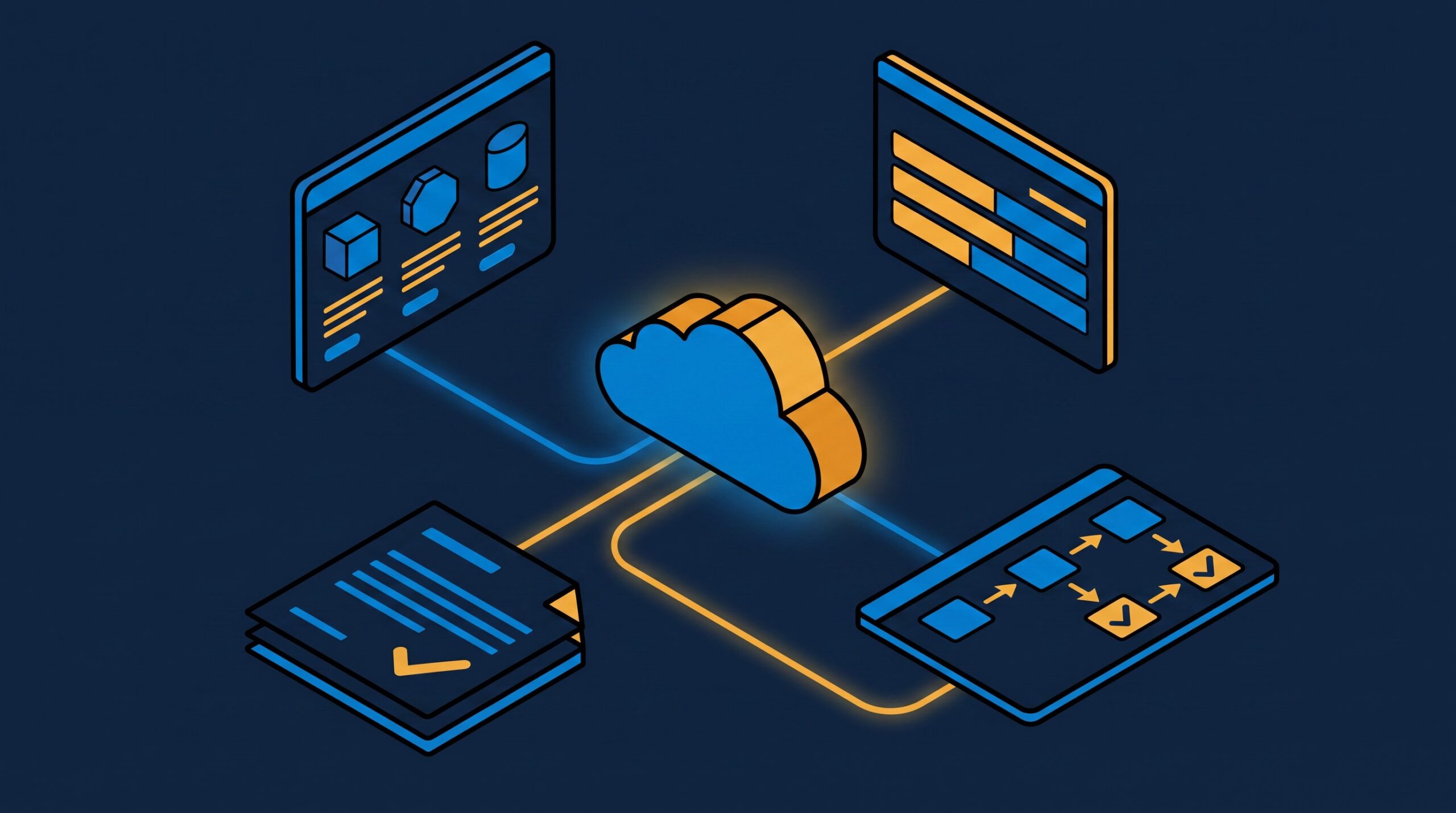
The Revenue Cloud Solution
The migration was delivered through a phased implementation designed to reduce risk while the business continued operating.
Product Catalog Rationalization
Duplicated SKUs, outdated bundles, and accumulated rules were consolidated into a simplified commercial structure — cutting active configuration rules from 427 to 263 (–38%).
Pricing Architecture Redesign
Customer-specific, tiered, volume, multi-year, contracted, usage-based, and regional pricing moved into configurable platform capabilities — reducing custom pricing code by ~46%.
Streamlined Approvals
Approvals were redesigned around commercial risk rather than hierarchy. Quotes within thresholds progress automatically; manual approvals dropped from 61% to 37% of quotes.
Contracts & Amendments
Upgrades, quantity changes, replacements, early renewals, co-terminations, and multi-year amendments were standardized — improving consistency from sales through billing.
Integration with Enterprise Systems
Revenue Cloud was integrated with the existing CRM, ERP, billing, tax, and provisioning systems. A standardized integration layer replaced brittle point-to-point interfaces, providing clearer data ownership across the revenue lifecycle and fewer synchronization failures between quoting and downstream systems.
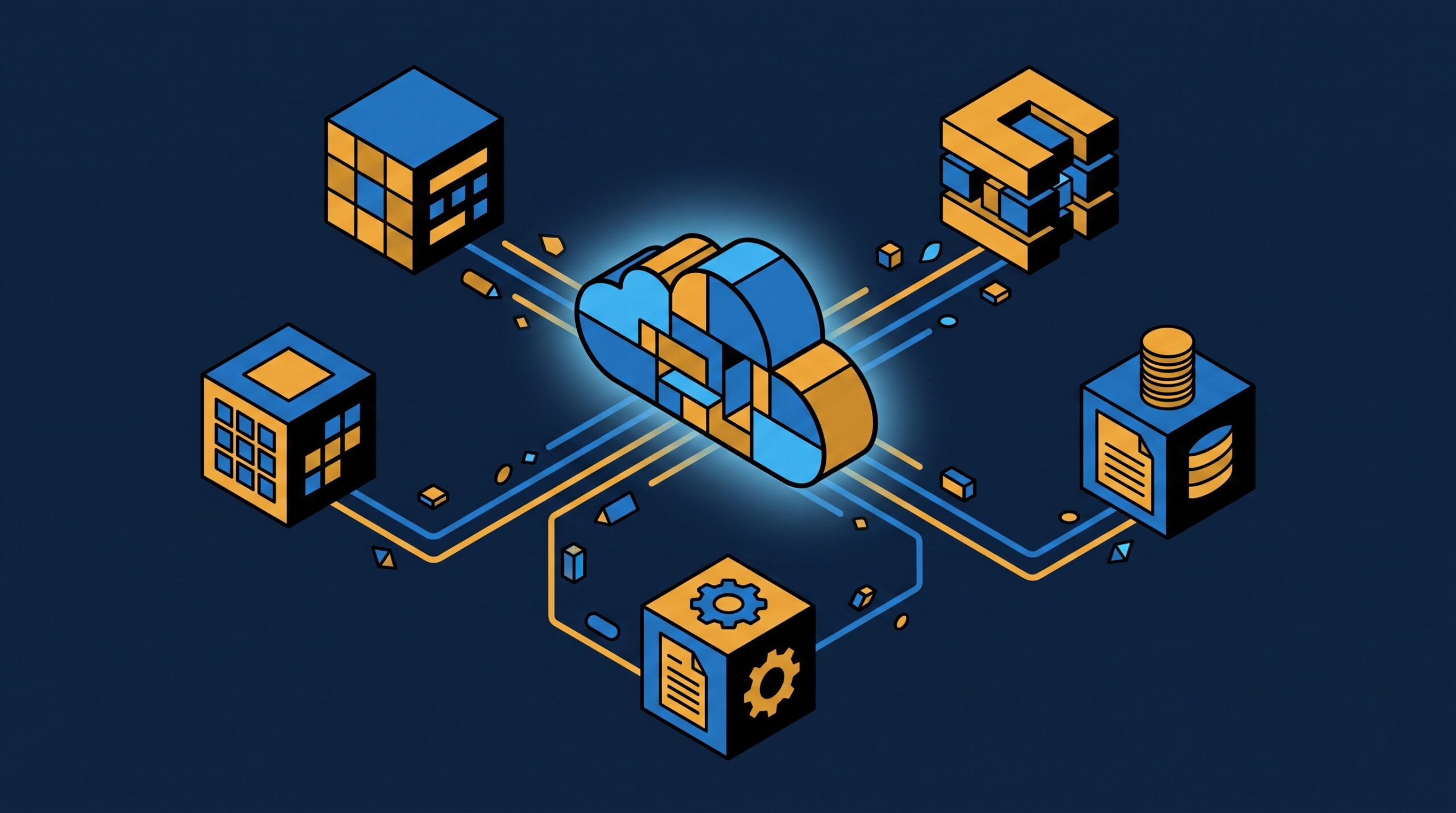
Migration Approach
01
Discovery & Rationalization
Every configuration rule, pricing script, quote template, workflow, integration, and business exception was documented and evaluated: migrate, redesign, consolidate, or retire. This prevented years of technical debt from being recreated in the new platform.
02
Core Revenue Cloud Implementation
The first release covered the highest-volume processes — standard subscriptions, renewals, common bundles, discounting, and enterprise approvals — rolled out to a controlled group of ~220 sales users before wider release.
03
Complex Enterprise Deals
Multi-year enterprise agreements, custom pricing arrangements, and global contracts followed, with enhanced support for amendments and co-termination scenarios.
04
Usage-Based Revenue Models
New consumption-based offerings were incorporated into the same architecture as the subscription business — enabling hybrid agreements combining subscriptions, services, and usage-based charges.
Results at a Glance
Within nine months of the initial production rollout, the organization recorded measurable improvements across sales operations, pricing governance, and platform maintenance.
| Metric | Before | After Revenue Cloud | Improvement |
|---|---|---|---|
| Complex quote turnaround | 3.7 days | 1.7 days | 54% faster |
| Average approval time | 9.4 hours | 5.3 hours | 43% faster |
| Pricing-related corrections | Baseline | –68% | 68% reduction |
| Active configuration rules | 427 | 263 | 38% reduction |
| Custom pricing code | Baseline | –46% | 46% reduction |
| New product launch time | 5–6 weeks | 8–10 business days | ~70% faster |
| Quotes completed same day | 41% | 72% | +31 pts |
| Quoting support tickets | Baseline | –34% | 34% reduction |
| Sales user adoption | 76% | 91% | +15 pts |
Within three months, 91% of active sales users were completing quotes directly through the new process without operational assistance.
Key Implementation Lessons
Don’t Rebuild Legacy Complexity
Treat migration as business-process redesign, not platform replacement. Rules and customizations were challenged before being migrated — much once-necessary functionality was no longer relevant.
Establish Strong Governance
Revenue Cloud brought flexibility, matched with stronger governance: a centralized revenue operations team now maintains commercial standards across regions.
Test Real Enterprise Deal Scenarios
Test cases were built from actual complex deal patterns — global agreements, multi-year discounts, amendments, partial renewals, negotiated pricing — surfacing edge cases before rollout.
Treat It as a Revenue Platform
The migration became more valuable once quoting was no longer viewed as an isolated sales function, but as part of a revenue architecture connecting sales, contracting, billing, finance, and customer lifecycle.
The Long-Term Impact
The migration delivered more than a faster quoting system. Sales teams build and approve complex quotes faster. Revenue operations introduces pricing changes with less development effort. Finance benefits from more consistent commercial controls, and technology teams manage a significantly simpler customization footprint.
The organization now has a revenue platform designed to evolve with the business — rather than becoming a constraint on future growth.
For large organizations with mature Salesforce CPQ environments, migration to Revenue Cloud is an opportunity to address years of accumulated complexity while modernizing the broader quote-to-revenue process — and to build a stronger foundation for subscription, consumption, and hybrid revenue models.
Planning a CPQ to Revenue Cloud Migration?
Applikon helps enterprises rationalize their CPQ complexity and modernize quote-to-cash on Salesforce Revenue Cloud — without disrupting the business along the way.